
A memorial video for the shloshim or the yahrzeit (azkara)
 By Sagie, founder of Echoes·Updated November 2, 2026
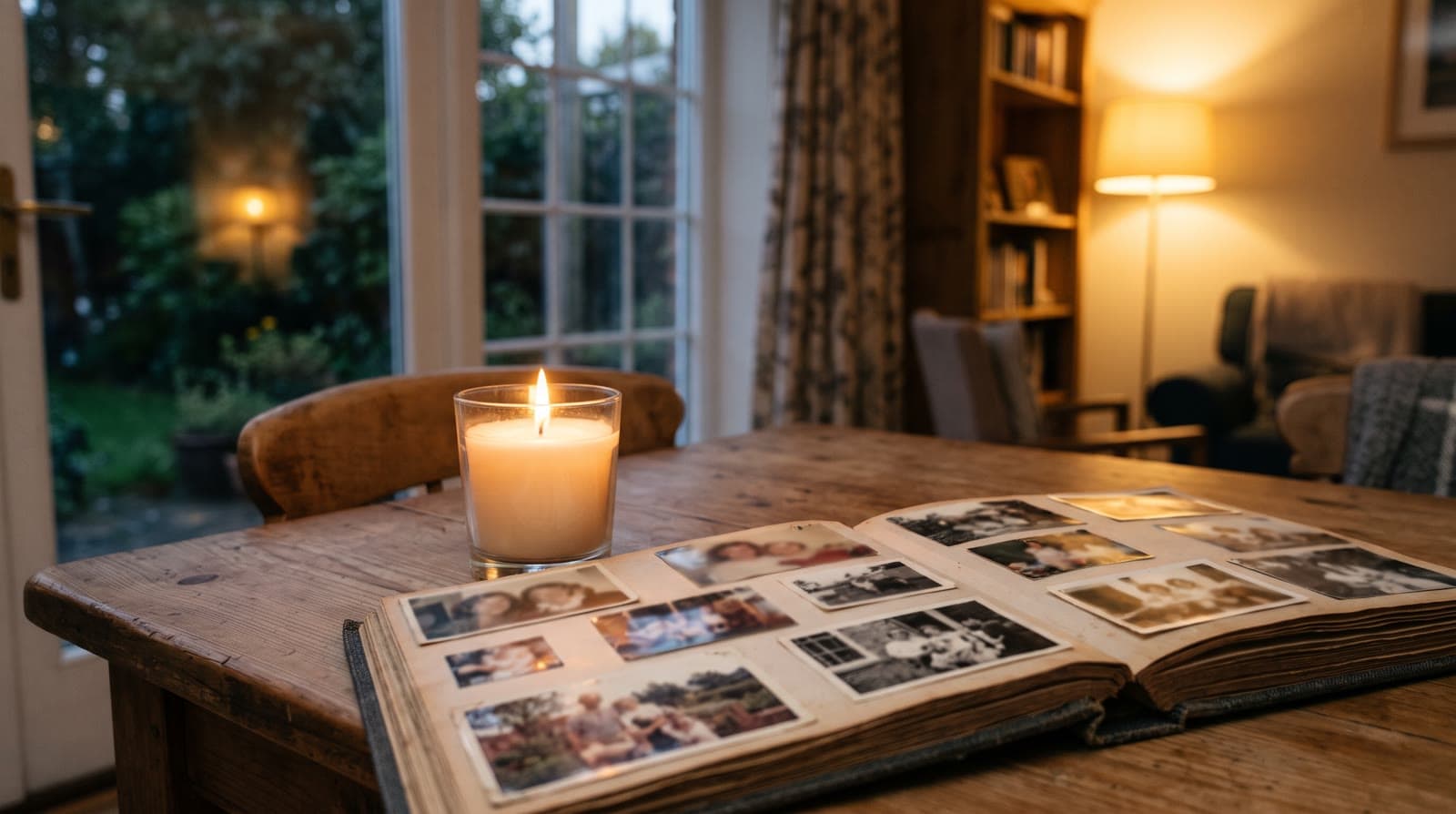
A memorial video for the shloshim or the yearly memorial (azkara or yahrzeit) is a short video of photos from their life, played when the family gathers. There is time to prepare it without rushing: ask the family for photos by a date, put them in life order, add the name and years, and check it beforehand.
There is time to prepare, without rushing
Preparing for the shloshim falls within the first month, and the yearly memorial can be a hard day too. A video doesn't need to be big or perfect: a short, simple one is enough.
The shloshim, at the end of the first thirty days, and the yearly memorial, every year after that, leave time to prepare: many families gather at the grave and then at home, or in a hall or a community room, and the date is known weeks ahead. If the family wants a video, there is time to gather photos from every part of the family.
Before you start, ask the closest family (a spouse, the children, the parents) what they would like: which photos, which words, which song, and whether a recording of their voice should play. Their wishes come first, and it's kind to show them the video privately a few days before.
This guide covers the practical side of those two dates, whether the video is in memory of a father or a mother, a partner, a sibling, a child or a grandparent. For the basics, start with how to make a memorial video from photos, and if you're weighing a simple slideshow instead, see memorial slideshow or memorial video.
Gather photos from the whole family
Each branch of the family holds a different part of the life: a sister has the childhood album, a son has the army years, the grandchildren have the last few years on their phones. The simplest way to reach everyone is one short message in the family WhatsApp group:
- What you need: clear photos where their face is visible, from any year.
- A date: "by Sunday the 14th", about a week before the memorial, so there is time to make the video and check it.
- Who collects them: one person, so photos don't get scattered across chats.
Old prints don't need a scanner. Photograph each one with a phone in even daylight, held straight on. For fragile or precious originals, the Library of Congress has a practical guide to caring for and handling photographs. There's more on tracking down photos in finding photos of a loved one who passed.
The one rule that matters for every photo: the face has to be clearly visible. If it's turned away, tiny or hidden, the AI fills in the details and it stops looking like them. Once the photos are in, put them in the order the life was lived, childhood first. If the family prefers, leave out photos from the illness or the last months.
Making the video is simpler than it sounds. As one customer put it:
"At first I thought it was complicated and once you start it's really simple"
- Maayan Malka
And if something gets stuck, a real person answers on WhatsApp.
How long it should be
There is no right length. For a gathering at home, two to four minutes is a comfortable length, with time for photos from across the life. A shorter video, with fewer photos, is fine too.
The photo count sets the length. The smallest package is a 1-minute video, which takes 13 photos in Growing style or 12 in Classic style, and each extra minute takes 12 more. A three-minute Growing video takes 37 photos, so gather the photos first and let them set the length. The guide on how long a photo video should be has the full numbers.
The words on screen
A memorial video needs only a few words, and they can go in four places:
- The opening text: the name and the years, and a line the family chooses. Some families add z"l (ז"ל) after the name, or "may their memory be a blessing" (יהי זכרו ברוך / יהי זכרה ברוך), and some prefer just the name.
- Text slides: a colored slide shown before a part of the video, while the music keeps playing. If the video has more than one part, a slide can introduce each one, such as "The years in Haifa" or "Grandma and her grandchildren".
- Text on animation: a short line over one animation, from start to end, such as a year or an age. A few of these quietly mark the chapters.
- The closing: a final slide, a photo or a video with your own words over it, or a designed ending with a title and an optional subtitle.
For the wording itself, see what to write in a memorial video. Hebrew works in all four places, as Hebrew text in a photo video explains.
An opening and a closing that fit
An AI video opening with your own text can begin the video. Several styles suit a memorial: Floating Lanterns, where a glowing lantern carries their story into the evening sky, Reflection in Water, where one touch of the water ripples into their story, and Album of Memories, where it opens like a treasured photo album.
The closing is where a real recording can play. A home video of them, a toast or a few words at a family dinner, can close the video, up to 2 minutes long, with its own sound. Choose "Only your video's sound" and the music stops, so their voice is heard on its own. Voice narration over the animations isn't supported, so a real recording, in the closing or in a video opening of your own, is where their voice can be heard.
A calmer pace, and the music
Turn on Longer animations so each animation plays a little longer in the final video. A slower pace gives people time to stay with each photo.
For music, upload a song they loved, choose something quiet from the built-in library, or create a custom song from a few memories of them, with singing or instrumental only. Some families prefer no music during the year of mourning; you can set the music volume to zero and the video plays silently. The guide to music for a memorial video goes into the choice.
Which style to choose
The Growing style is our signature video: each photo naturally morphs into the next, so a life from childhood to the recent years becomes one continuous video. It works best with the same main person in every photo and fewer than three people in each. For group photos, Classic style works best, and a video can hold both parts: a Growing part of their life, and a Classic part with the big family photos.
Where it plays, and a quiet moment for it
An azkara is held at home, in a hall or a community room, and not always somewhere set up for video. A few small preparations let it play calmly when the time comes:
- At home: a TV with a laptop cable, or the MP4 on a USB stick. Try it the day before, sound on.
- In a hall or a community room: send the file to whoever runs the screen a few days ahead, and ask them to open it on the real equipment.
- After the cemetery visit: people may come straight from the cemetery, and not all at once, so wait until everyone is seated before you play it.
- Keep a backup copy on a phone, and ask someone to take care of starting it, so the closest family doesn't have to think about the technical side.
Landscape suits a screen in a room. The shape is chosen when you upload the photos, with a suggestion based on them, so decide before you start. The guide on playing a video on a screen in a room covers the screen and sound in more detail.
Next year, the same video can grow
For the yearly memorial, there's no need to start over. If the family wants, you can add photos to the same Growing video, at the start, at the end, or between existing photos. A photo at the start or the end adds one animation; a photo in the middle replaces one animation with two, so it uses two. New animations come from your package, and re-compiling the final video is included as many times as you like. If a cousin finds a box of old prints, they can join the video next year, or the video can stay exactly as it was.
You can also make separate projects, for example a longer one for the memorial and a short one to share in the family group.
What makes Echoes different
Echoes turns photos from across the years into one continuous video of a life. Each photo flows into the next, so a little girl grows into the grandmother the family knew, or a couple ages together over decades, in a single unbroken shot. Echoes then finishes it, ready to play at the memorial.
- Growing videos. You add dozens of photos of the same person or couple, and Echoes morphs each one into the next. It isn't a slideshow or a set of separate animations: you watch someone grow up or grow old in one continuous video. It fits memorials, family tributes, and anniversaries.
- Automated, but guided. Echoes does the heavy lifting: it picks the AI models, writes the prompts, generates the animations, and stitches everything into one finished video. You still decide everything that matters. It walks you step by step through ordering your photos, reviewing each animation (with a full set of free retries), and choosing the opening, the ending, and the music. You get the result of a skilled AI video workflow without having to learn one.
- A finished video, not a tool. The result is a complete video with titles, an ending, a soundtrack, and a share link. It's priced by the length of the finished video, not by credits or tokens: a one-time purchase, with a 30-day money-back guarantee.
Your first animation is free to try, so you can see how one of their photos looks, and take your time deciding.

About the author
Sagie, founder of Echoes
Sagie is the founder of Echoes. He built it in 2025 after making a video from his mother's old childhood photos, and has since helped hundreds of families turn their own photos into videos.
Frequently asked questions
- How long does it take to make?
- Making it doesn't take much of your time: most people finish in under 30 minutes once the photos are chosen. The animations are created in the background, so you can close the page and come back when they're ready. Gathering photos from the family can take longer than making the video, so it helps to ask a few weeks ahead.
- What does it cost?
- It's a one-time purchase priced by the length of the finished video, not a subscription, with a 30-day money-back guarantee. Your first animation is free to try. The opening, the music, a bank of free retries sized to the package, and re-compiling the final video as often as you like are all included.
- Can family abroad watch it if they can't come?
- Yes. With the MP4 you also get a share link, so relatives who can't travel for the memorial can watch it on their phone, before or after the gathering. The video stays in your dashboard, so you can download it or share it again later.
- What if some of the photos are blurry or faded?
- Faded is fine: an old, slightly washed-out print can still work well as long as the face is clearly visible. A blurry or hidden face is different, because the AI fills in the missing details and it stops looking like them. Choose a clearer photo of the same time, or leave that one out.
- Does Echoes make them speak or add their voice?
- No. Echoes doesn't clone voices, doesn't create a talking avatar, and doesn't put new words in anyone's mouth. It animates the real photos you upload with gentle, natural motion. If you have a real home video of them, it can play as the closing with its own sound.
- Are the photos private?
- Yes. Your photos are private to you, stored securely, and never used to train AI models. They're used only to make your video, and you can delete your photos and videos from your dashboard at any time.